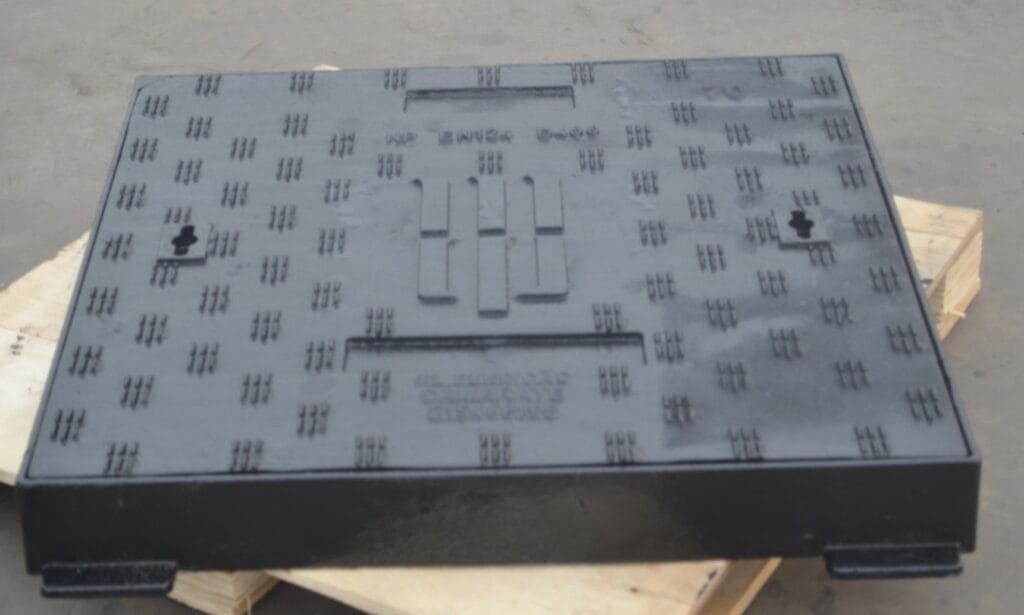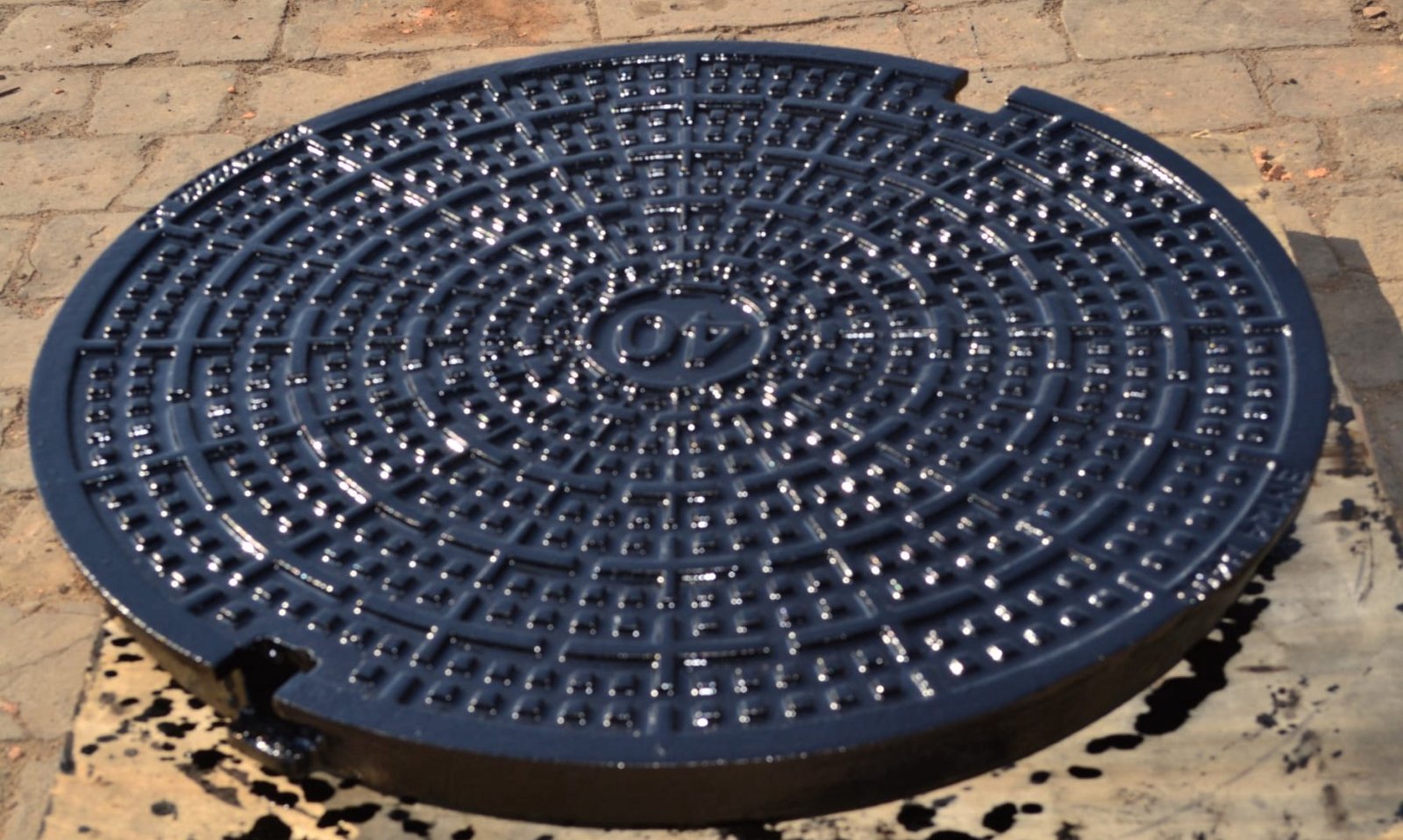
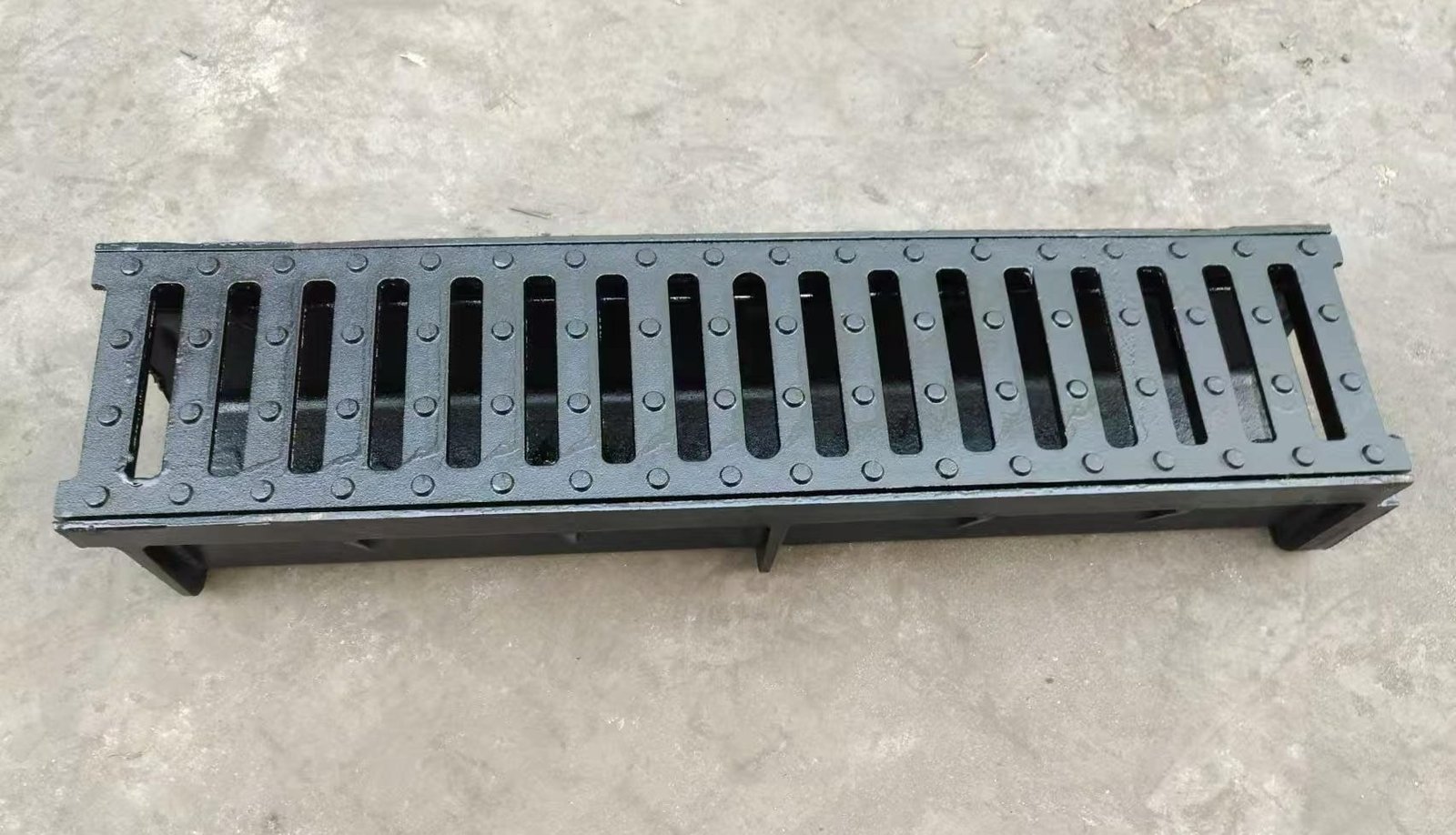
Ductile iron manhole covers and composite plastic manhole covers are two widely used types of manhole covers, with significant differences in material properties, performance, and application scenarios. The following is a detailed comparison from core dimensions to help understand their distinctions:
I. Essential Differences in Materials
- Ductile Iron Manhole Covers:
Made primarily of ductile iron (a modified form of cast iron where spheroidizing agents like magnesium are added to make graphite particles spherical), they are metal products. Formed through casting, this material has significantly higher strength than traditional gray cast iron.
- Composite Plastic Manhole Covers:
Based on polymer materials (such as polyethylene or polypropylene), mixed with fillers (like glass fiber, calcium carbonate, or steel skeletons), and formed by compression molding or injection molding. They are “composite material” products, not pure plastic.
II. Comparison of Core Performance
1. Load-Bearing Capacity (One of the Most Critical Differences)
- Ductile Iron Manhole Covers:
Extremely strong. They can meet the “heavy-duty” standard specified in GB/T 23858-2009 (bearing capacity ≥ 360kN), making them suitable for high-traffic main roads, expressways, and other scenarios with heavy vehicle loads.
Principle: Ductile iron has a tensile strength of over 420MPa, close to that of steel, and its toughness is much higher than ordinary cast iron, thus achieving excellent load-bearing and deformation resistance.
- Composite Plastic Manhole Covers:
Moderate load-bearing capacity. They generally meet “light-duty” or “standard-duty” requirements (bearing 20-100kN). Some reinforced models can be used in residential areas or secondary roads, but they cannot withstand long-term rolling by heavy vehicles (prone to cracking or deformation).
Limitation: Polymer materials have inherent rigidity limitations; although fillers can enhance strength, they cannot reach the load-bearing level of metals.
2. Corrosion Resistance and Environmental Adaptability
–Ordinary urban roads (dry)
- Ductile Iron Manhole Covers-Stable performance, but requires regular rust prevention (painting)
- Composite Plastic Manhole Covers-No maintenance needed, stable performance
–Humid/rainy areas
- Ductile Iron Manhole Covers-Prone to rust (reaction of iron with water and oxygen), requiring frequent maintenance
- Composite Plastic Manhole Covers-Water-resistant, no rust risk
–Coastal/industrial areas (saline-alkali, acid-base)
- Ductile Iron Manhole Covers-Corrodes quickly (salts and acids accelerate rusting), shortening service life
- Composite Plastic Manhole Covers-Acid-alkali and salt-resistant, almost no corrosion, longer service life
–Sewage wells/chemical plants
- Ductile Iron Manhole Covers-Easily corroded by sewage and chemicals, Anti-corrosion treatment can solve this problem
- Composite Plastic Manhole Covers-Fully resistant, no additional protection needed
–Conclusion: Composite plastic manhole covers have significant advantages in corrosive environments, while ductile iron ones rely on anti-corrosion treatments (which are more costly).
3. Weight and Installation & Maintenance
- Ductile Iron Manhole Covers:
Heavy (a standard Φ700mm model weighs about 30-50kg). The advantage is that they can resist vehicle impact (less likely to shift); the disadvantage is that installation and maintenance require 2-3 people to collaborate (labor-intensive).
- Composite Plastic Manhole Covers:
Lightweight (about 10-20kg for the same size), allowing single-person handling, with high efficiency in installation and replacement. However, they need anti-shift structures (such as buckles or weighted bases) to prevent being rolled over by vehicles.
4. Anti-Theft Performance and Safety
- Ductile Iron Manhole Covers:
The material has recycling value (scrap iron can be sold). Although most are now designed with anti-theft locks (such as anti-pry bolts or hidden locks), there is still a risk of theft (theft may leave “road traps”).
- Composite Plastic Manhole Covers:
The material has no recycling value (scrap yards refuse to accept it), fundamentally solving the anti-theft problem and ensuring higher safety (especially suitable for remote roads and residential areas).
II. Summary of Applicable Scenarios
- Priority for Ductile Iron Manhole Covers:
Scenarios that need to bear heavy vehicle loads (main roads, expressways, airports, large parking lots) and areas with extremely high stability requirements (to avoid accidents caused by shifting).
- Priority for Composite Plastic Manhole Covers:
Light-load scenarios (residential sidewalks, non-motorized lanes, green belts), corrosive environments (coastal areas, chemical plants, sewage wells), and areas with high anti-theft needs (remote roads, old residential areas).
IV. Core Differences in One Sentence
Ductile iron manhole covers stand out for their “strength and stability” and are suitable for heavy-load scenarios; composite plastic manhole covers excel in “corrosion resistance, light weight, and anti-theft performance” and are suitable for light-load and special environment scenarios. The choice should be based on comprehensive judgment of load requirements, environmental conditions, and maintenance costs.